Stand in any premium Bangalore corporate lobby in 2026 and you will see one of two technologies dominating the back wall: a seamless LED video wall with no visible bezels, or an LCD video wall made up of multiple thin-bezel LCD panels tiled together. They look superficially similar from across a lobby — both display large dynamic content. They cost dramatically differently. They last dramatically differently. And the right answer for your office depends entirely on use case, budget, and the room they go into.
This guide compares LED video wall vs LCD video wall head-to-head — five technical differences that drive cost, where each technology wins, real Bangalore use cases, 2026 pricing, and 10-year total cost of ownership. For full LED video wall details, see our hub: LED video wall in Bangalore.
LED Video Wall vs LCD Video Wall — Quick Verdict
Both display large dynamic content. The choice depends on viewing distance, budget, and how long the wall needs to last.
| LED Video Wall | LCD Video Wall | |
|---|---|---|
| Bezels (gaps between panels) | Zero — seamless | Visible thin lines (1.7-3.5 mm) |
| Best viewing distance | Close to far (any) | Medium to far (more than 2 m) |
| Brightness | 800-1,500 nits indoor; 5,000+ nits outdoor | 450-700 nits typical |
| Lifespan | 50,000-100,000 hours | 30,000-50,000 hours |
| Repair / panel replacement | Hot-swap individual modules | Replace entire LCD panel |
| Initial cost per sq.ft (2026) | ₹15,000 – ₹70,000 | ₹8,000 – ₹18,000 |
| Power consumption | Higher | Lower |
| Best for | Lobbies, retail, broadcast, control rooms, premium boardrooms | Conference rooms, video conferencing, training centres |
The 5 Technical Differences That Drive Every Decision
1. Bezels — the single biggest visible difference
LED video walls are made of individual self-illuminating LED modules that tile together with zero gap between modules — the image is genuinely seamless. LCD video walls are made of separate LCD panels (typically 46-inch or 55-inch) with thin-bezel edges (1.7-3.5 mm gap between panels). At normal viewing distance, the LCD bezels are visible as faint grid lines — fine for spreadsheets, distracting for branded content or full-screen video.
2. Viewing distance flexibility
LCD video walls require viewers to sit at least 2 metres back — closer than that, the bezels become visibly distracting. LED video walls have no minimum viewing distance — visitors can walk up and touch the wall (and many do, in retail and lobbies). For premium retail flagships, customer-facing lobbies, and any space where viewers approach the wall closely, LED is the only realistic choice.
3. Brightness and ambient light tolerance
Indoor LED video walls deliver 800-1,500 nits brightness — enough to remain readable in well-lit corporate lobbies with afternoon sunlight pouring in. Outdoor LED video walls reach 5,000-10,000 nits — direct-sun visible. LCD video walls peak at 450-700 nits — comfortable for normal indoor use but they wash out in bright lobbies and cannot be used outdoors.
4. Lifespan and replaceability
LED video walls are rated for 50,000-100,000 hours of operation at 50% brightness — 10-15+ years of typical commercial use. Individual LED modules are hot-swappable, so partial failures do not take down the whole wall. LCD video walls are rated for 30,000-50,000 hours — 5-8 years typical commercial life. When an LCD panel fails, you swap the whole panel (and panel matching for colour consistency becomes harder as the original product line ages out).
5. Cost — initial and 10-year
LED video walls cost 2-4× more upfront. But their longer lifespan, hot-swap modules, and lower failure rate mean the 10-year TCO advantage tilts back toward LED for high-traffic 24/7 installations. For 9-to-5 conference room use, LCD's 5-8 year lifespan is enough — and you save 60-70% on initial cost.
When LED Video Wall Wins — and When LCD Wins
Use LED Video Wall when…
- Branded lobby walls where visitors walk close to the wall
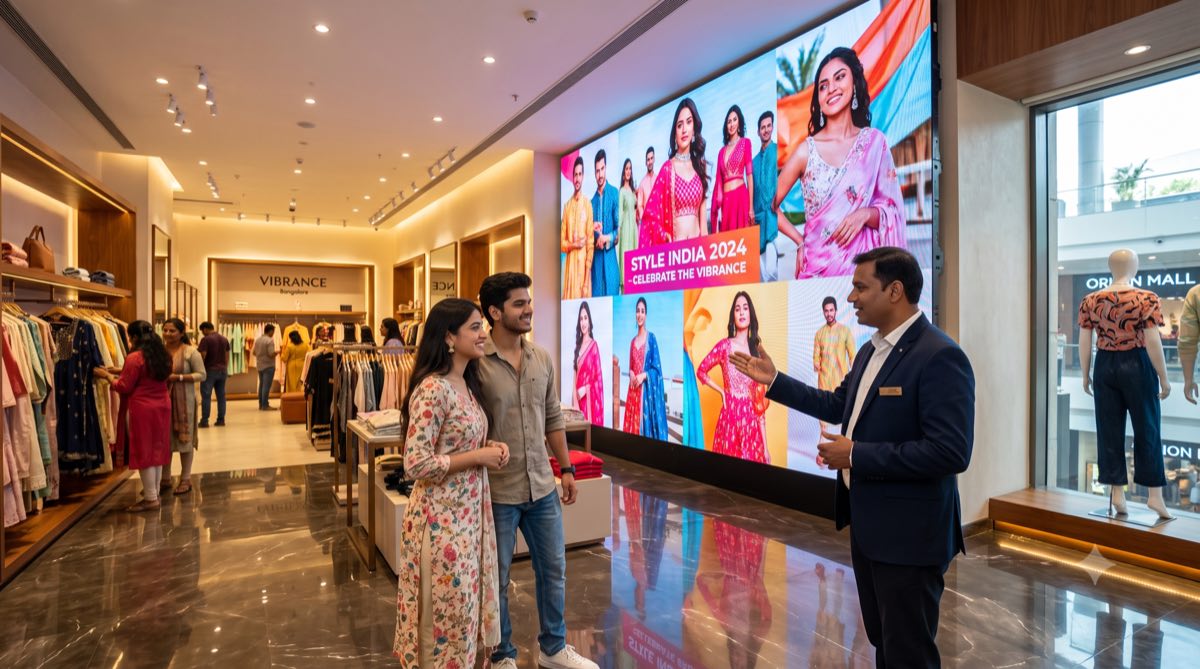
- Premium retail flagships where customers approach within 1 metre
- 24×7 control rooms and NOCs running continuously for years
- Broadcast studios where seamlessness is non-negotiable
- Outdoor signage — only LED works outdoors
- Fine pitch boardrooms where the LED wall replaces a projector + screen + traditional display setup
- Auditorium stage backdrops visible to 100-1,000+ audience members
Use LCD Video Wall when…
- Conference and training rooms where viewers sit 3+ metres back
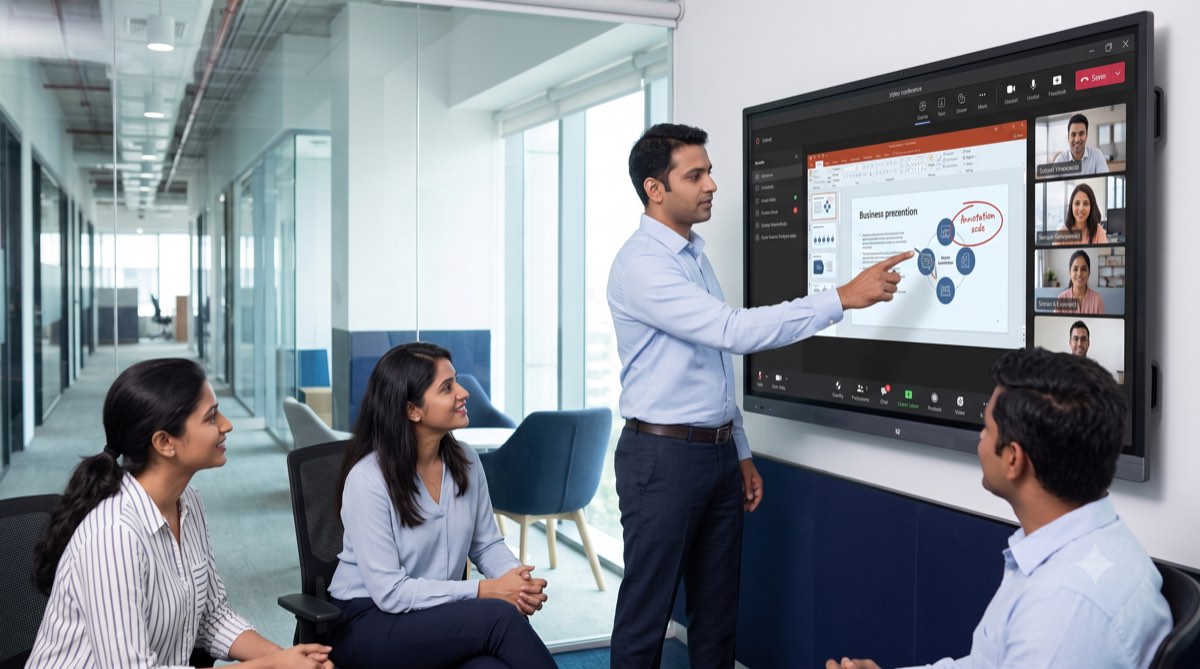
- Video conferencing displays for hybrid meeting rooms (LCD’s brightness is fine for VC use)
- Budget-constrained projects where you need a large display and LED is out of budget
- Spreadsheet-heavy / data-dashboard use where thin bezels do not distract from numbers
- Secondary monitoring walls in offices, IT NOCs running 8-12 hours/day (not 24/7)
- Education / classroom large-format use where the display is wall-flush but not the central brand statement
LED Video Wall vs LCD Video Wall — Real 2026 Pricing
| Use case | Wall size | LED video wall (₹/sq.ft + total) | LCD video wall (₹/sq.ft + total) |
|---|---|---|---|
| Boardroom (fine-pitch / 4-panel) | ~21 sq.ft | ₹40,000 – ₹70,000/sq.ft → ₹12 – 20 lakh | ₹8,000 – ₹15,000/sq.ft → ₹2.5 – 4 lakh |
| Corporate lobby (premium) | ~55 sq.ft | ₹25,000 – ₹40,000/sq.ft → ₹16 – 28 lakh | ₹10,000 – ₹15,000/sq.ft → ₹6 – 10 lakh |
| Auditorium stage backdrop | ~220 sq.ft | ₹18,000 – ₹26,000/sq.ft → ₹40 – 70 lakh | ₹10,000 – ₹13,000/sq.ft → ₹24 – 32 lakh |
| Retail flagship | ~84 sq.ft | ₹25,000 – ₹40,000/sq.ft → ₹22 – 40 lakh | ₹10,000 – ₹14,000/sq.ft → ₹9 – 14 lakh |
| Outdoor façade | ~480 sq.ft | ₹14,000 – ₹22,000/sq.ft → ₹70 lakh – 1.4 crore | Not applicable (LCD cannot go outdoor) |
LED is 2-4× the cost of LCD on a per-square-foot basis. But the LED price includes hot-swap modules, longer warranty support, and a 12-15+ year lifespan.
10-Year Total Cost of Ownership — LED vs LCD
Upfront price is not the whole picture. Here is the realistic 10-year TCO for a corporate lobby wall (55 sq.ft typical) in Bangalore in 2026:
| Cost component | LED Video Wall | LCD Video Wall |
|---|---|---|
| Year 0 — initial install | ₹22 lakh | ₹8 lakh |
| Annual AMC (10 years) | ₹1.8 L × 10 = ₹18 L | ₹70K × 10 = ₹7 L |
| Year 5 — panel/module replacements | ₹2 lakh (hot-swap modules) | ₹3.5 lakh (full panel + colour-matching) |
| Year 8 — refresh / processor upgrade | ₹1.5 lakh | ₹7 lakh full LCD set replacement (panels reaching end of life) |
| 10-year TCO | ₹43.5 lakh | ₹25.5 lakh |
LCD wins 10-year TCO for this scenario. But for high-traffic 24×7 lobbies, premium retail flagships, and broadcast/control rooms — LED’s higher reliability and module replaceability shift the TCO advantage back to LED.
Real Bangalore Projects — LED and LCD Video Walls
Project A — IT corporate lobby in Manyata Tech Park (LED)
- Wall: P1.8 fine-pitch LED, 12 ft × 5 ft (60 sq.ft)
- Why LED: visitors walk within 1 metre of the wall; seamless brand storytelling required
- Brand: Samsung IER
- Total cost: ₹22 lakh including processor, mounting, civil
- Timeline: 5 weeks
Project B — Mid-size conference room in Embassy GolfLinks (LCD)
- Wall: 2×2 LCD video wall using 55-inch ultra-narrow bezel panels (11 ft × 6 ft / 66 sq.ft)
- Why LCD: conference room use, viewers seated 4+ metres back, budget priority
- Brand: Samsung VM55T-U (1.7 mm bezel-to-bezel)
- Total cost: ₹8.4 lakh
- Timeline: 2 weeks
Project C — Engineering college auditorium stage backdrop (LED)
- Wall: P3 LED, 20 ft × 11 ft (220 sq.ft)
- Why LED: stage backdrop visible to 200+ audience, dynamic content, full-screen video
- Brand: Absen Acclaim
- Total cost: ₹52 lakh including video processor, mounting frame, ceiling speakers integration
- Timeline: 8 weeks
LED Video Wall vs LCD Video Wall — Frequently Asked Questions
What is the difference between LED video wall and LCD video wall?
An LED video wall is built from self-illuminating LED modules with zero gap between modules — the image is genuinely seamless. An LCD video wall is built from separate LCD panels (typically 55-inch with 1.7-3.5 mm thin bezels) tiled together. LED has no minimum viewing distance, higher brightness (800-1,500 nits indoor vs 450-700 nits LCD), and longer lifespan (50,000-100,000 hours vs 30,000-50,000). LCD costs 2-4× less upfront but has shorter lifespan.
Is LED video wall worth the higher cost compared to LCD in 2026?
Yes — for premium lobbies, retail flagships, 24×7 control rooms, broadcast studios, outdoor signage, and any space where viewers approach within 2 metres of the wall. No — for conference rooms, training rooms, and video conferencing where viewers sit 3+ metres back and the budget priority is high. LCD’s 60-70% cost savings make it the right choice for these use cases.
How much does an LED video wall cost compared to an LCD video wall in Bangalore in 2026?
Indicative project costs for a 55 sq.ft corporate lobby wall in Bangalore in 2026: LED video wall (P2 pitch) costs ₹16-28 lakh. LCD video wall (55-inch ultra-narrow bezel panels, 2×2 configuration) costs ₹6-10 lakh. LED is 2-3× the upfront cost but has 1.5-2× the lifespan.
Can LCD video wall be used outdoors?
No. LCD video walls peak at 450-700 nits brightness, are not weatherproof, and wash out in direct sunlight. Outdoor signage requires LED video walls rated for outdoor use (5,000-10,000 nits brightness, IP65 / IP66 weather sealing). Brands like Absen, Unilumin, and Samsung make dedicated outdoor LED video walls for Indian climate conditions.
What is the lifespan of an LED video wall vs LCD video wall?
LED video walls are rated for 50,000-100,000 hours at 50% brightness — 10-15+ years of typical commercial use, with hot-swappable modules for partial repairs. LCD video walls are rated for 30,000-50,000 hours — 5-8 years of typical commercial life. When LCD panels fail, you replace the whole panel (and colour-matching with newer panels becomes harder as the product line ages out).
Which is easier to repair — LED or LCD video wall?
LED is significantly easier to repair. Individual LED modules can be hot-swapped without taking down the entire wall — replace a single module while the others keep displaying. LCD video walls require replacing the entire failed panel (typically 55-inch unit), and colour-matching becomes a challenge if the original product line is no longer manufactured.
Can I mix LED and LCD video walls in the same building?
Yes — and many premium Bangalore offices do exactly this. Use LED video wall in the lobby and brand-facing areas where visitors approach closely. Use LCD video walls in conference rooms, training rooms, and IT operations centres where viewers sit further back and budget is more constrained. Vantage Systems regularly delivers mixed deployments across IT campuses.
What pitch LED video wall should I choose for a Bangalore lobby?
For a corporate lobby in Bangalore where viewers walk within 1-3 metres of the wall, P1.5 to P2.5 pitch is ideal. The optimal viewing distance in metres roughly equals the pixel pitch in mm — so P2 looks sharp from ~2 metres, P3 looks sharp from ~3 metres. For lobbies where visitors approach within 1 metre, P1.5 or finer is recommended. Full pixel pitch decoder: see our companion guide on LED video wall pixel pitch — how to choose.
Get a LED or LCD Video Wall Quote in Bangalore
Vantage Systems has been Bangalore’s trusted AV integration partner since 1996. Authorised distributor with OEM-warranty hardware, AVIXA-trained engineers, transparent line-item BoQ, and AMC included. Tell us about your project — we visit your site within a week and deliver a tailored quote in 5-7 working days.
- Call: +91 99451 70702
- Email: avsupport@vantagesinc.com
- Office: 21, Wellington Street, Richmond Town, Bengaluru, Karnataka 560025
- Request a free site survey: vantagesystems.in/contact
Related reading: LED video wall in Bangalore — price, pixel pitch, top brands, digital signage ROI for Bangalore retail and corporate, See also our audio visual integration company in Bangalore overview, AV integration cost in Bangalore guide.